Pet Stroller Materials 101: Fabric, Frame & Wheel Options for OEM
Published 21 September 2026 · 9 min read · Pet Stroller OEM Editorial
A pet stroller OEM manufacturer is a factory that builds pet strollers to your specification — and the three material decisions that matter most are the fabric, the frame, and the wheels. Together they decide roughly 70% of a stroller's weight, durability, and landed cost, and they are the first things a buyer notices on a shelf or in a product photo. This guide walks an OEM buyer through the real-world options for each material, the trade-offs that actually show up in returns and reviews, and how to specify them so your private-label line hits the right price point for your market.
Fabric: 600D vs 900D Oxford, Mesh, and Padding
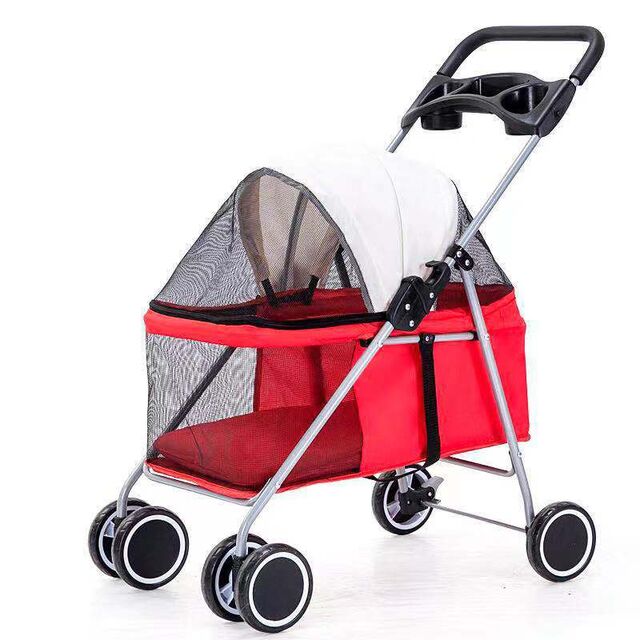
The cabin fabric is the part your customer touches and sees every day, so it carries both the aesthetic and the abuse. The industry baseline is Oxford cloth, a woven polyester measured in denier (D). Denier is the weight of a 9,000-meter thread: the higher the number, the thicker and more abrasion-resistant the weave. For a private-label pet stroller, the choice almost always lands between 600D and 900D.
600D Oxford is the entry standard. It is light, inexpensive, and perfectly serviceable for small-dog and cat strollers used on smooth city pavement. A 600D cabin keeps the FOB price competitive, which is why most foldable pet stroller OEM entry SKUs start here. 900D Oxford is the premium upgrade: it resists tearing, abrasion, and UV fading noticeably better, and it holds its shape on larger frames that carry 20 kg-plus pets. For large-dog and jogging strollers, 900D is the safer default because the fabric takes more load and more scuffs. Both are normally backed with a PU (polyurethane) coating that sheds light rain and wipes clean.
Do not let the shell do all the work. The breathable mesh panels — usually a fine polyester mesh on the cabin windows and the canopy — are what keep a pet from overheating, and they are the first thing a buyer checks for being escape-proof. A cheap, coarse mesh rips or stretches; a tightly woven, reinforced mesh survives a claw. Under the shell, a padded, removable floor mat adds comfort and is a feature buyers notice in photos. Specify the mesh grade and the mat in writing, because "mesh" and "padding" cover a very wide quality range.
- 600D Oxford — entry tier, lighter, lowest cost, best for small pets and city use
- 900D Oxford — premium tier, abrasion- and UV-resistant, best for large dogs and joggers
- PU-coated backing — light water resistance and easy wipe-clean maintenance
- Reinforced breathable mesh — ventilation plus escape-proof cabin integrity
- Removable padded floor mat — comfort feature that photographs well and adds perceived value
Frame: Aluminum vs Steel
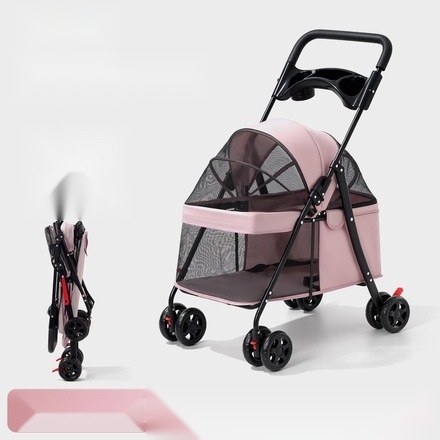
The frame is the structural skeleton, and the aluminum-versus-steel debate is the single biggest driver of weight and price. Aluminum tubing is roughly 30 to 40% lighter than equivalent steel and it does not rust, which makes it the default for foldable, travel, and airline-friendly strollers where every gram of shipping weight and every gram the owner carries matters. A lightweight pet stroller supplier will push aluminum for exactly this reason. The trade-off is cost: aluminum tube and the welding or riveting to join it is more expensive per unit than steel.
Steel wins on two fronts: price and raw strength. For large-dog strollers that must hold 30 kg (about 66 lbs) and up, steel is more forgiving under repeated heavy load and cheaper to source, so it keeps the FOB price down on the heavy-duty segment. The downside is weight and the need for a proper anti-corrosion finish, because a rusting frame is a review-killer. A real pet stroller OEM manufacturer stocks both tube types and offers powder-coating or anodizing in your Pantone or RAL color so the frame matches your brand, not the factory's leftover stock.
The table below is the shortcut most buyers actually use when they sit down with a quotation.
| Factor | Aluminum frame | Steel frame |
|---|---|---|
| Weight | Light (30–40% less) | Heavy |
| Corrosion | Naturally rust-free | Needs coating |
| Load rating | Up to ~25 kg typical | 30 kg+ comfortable |
| Relative cost | Higher | Lower |
| Best for | Foldable, travel, cat, small dog | Large dog, jogging, heavy use |
Wheels: EVA Foam vs Air-Filled PU vs Plastic
Wheels decide how the stroller feels to push, and they are where cheap builds quietly cut corners. The three real options are EVA foam, air-filled (pneumatic) PU, and solid plastic. EVA foam wheels are the workhorse of the category: they are light, completely maintenance-free, never go flat, and roll quietly on pavement. That combination is why a 4 wheel pet stroller manufacturer defaults to EVA for the majority of SKUs. The only weakness is ride softness on rough ground, where foam transmits bumps.
Air-filled PU wheels deliver the smoothest ride, which is why they appear on pet jogging stroller OEM builds and on premium large-dog models meant for parks and trails. The cost is a puncture risk and a maintenance ask (occasional topping-up). Solid plastic wheels are the budget option and, frankly, the one to avoid above entry tier: they are hard, noisy, and harsh on the pet. Most competent configurations use a swivel front wheel that locks for straight-line jogging, plus a light rear suspension to absorb shock so the pet is not bounced on every seam in the sidewalk.
Specify wheel diameter alongside material. Larger diameters (typically 6 to 12 inches) roll over curbs and gravel more easily, while smaller wheels keep a compact fold. Wheel retention — how securely the wheel attaches to the fork — is also a lab-checked safety item, so confirm it in the prototype rather than assuming it was done.
- EVA foam — light, maintenance-free, quiet; the default for most SKUs
- Air-filled PU — smoothest ride; best for jogging and trail, puncture risk
- Solid plastic — cheapest, harshest ride; avoid above entry tier
- Swivel-and-lock front wheel + rear suspension — shock absorption and control
- Larger diameter (6–12 in) — easier curb and rough-ground clearance
How Material Choice Drives Cost and Quality
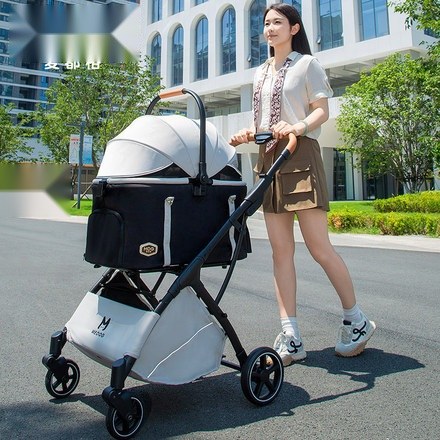
None of these decisions is free, and a good quotation makes that visible. Moving a cabin from 600D to 900D Oxford typically adds USD 1.50 to 3.00 per unit. Swapping a steel frame to aluminum adds roughly USD 4 to 8 per unit, but on a full container the lower shipping weight can claw back part of that gap, so the net premium is sometimes smaller than it looks on paper. Air-filled wheels add about USD 2 to 4 per set versus EVA foam. A transparent pet stroller OEM manufacturer lists each line — fabric, frame, wheels, mesh, padding, finish — so you can trade cost against durability instead of guessing.
Material choices also feed into compliance, even though they do not by themselves certify anything. A genuine factory builds to reference standards such as EN 1888-1:2018+A1:2022 for the EU market and ASTM F833-21 for the United States, and can arrange third-party testing through labs like SGS, TUV, or Intertek on request. Frame weld quality, fabric behavior under the relevant tests, and wheel retention are all items a lab inspects, so naming them in the prototype round — before tooling is cut — is far cheaper than discovering a gap at pre-shipment inspection. The practical rule is simple: decide the three materials up front, get them written into the sample, and let the sample settle the rest.
Conclusion: Specify Materials Before You Sample
Fabric, frame, and wheels are not afterthoughts — they are the product. Pick 600D or 900D Oxford by target price and pet size, choose aluminum for weight or steel for heavy load, and set wheel material by where the stroller will actually be pushed. Then put all three into the prototype so the sample reflects production, not a showroom guess. A reliable pet stroller factory China partner will confirm each option without hesitation and show you the cost line for every upgrade. Start with a small test order to verify the build, and scale once the materials match your brand.
Get a Free Quote & Material Spec Sheet
We respond within 24 hours on working days. Sample lead time 7 to 15 days. Bulk MOQ from 300 units per color.
Frequently Asked Questions
What fabric is best for a pet stroller OEM order?
For most private-label pet strollers, 600D Oxford fabric is the entry standard and 900D Oxford is the premium upgrade. 600D balances cost and abrasion resistance for everyday city use; 900D resists tearing and fading better for large-dog and jogging models. Both are usually backed with a PU coating for water resistance. Pair the shell with breathable mesh panels for ventilation and an escape-proof cabin.
Should I choose an aluminum or steel frame for my pet stroller?
Choose aluminum when weight and freight cost matter most — it is roughly 30 to 40% lighter than steel and will not rust, which suits foldable, travel, and airline-friendly strollers. Choose steel when you need a 30 kg-plus load rating for large dogs; steel is cheaper per unit and more forgiving under heavy, repeated use. A real pet stroller OEM manufacturer stocks both and powder-coats or anodizes the frame in your Pantone or RAL color.
What wheels are best for a pet stroller?
EVA foam wheels are the most common OEM choice: lightweight, maintenance-free, and quiet on pavement. Air-filled PU wheels give the smoothest ride for jogging and trail use but can puncture. Solid plastic wheels are the cheapest but deliver a hard, jarring ride and are best avoided for anything above entry tier. Most configurations use a swivel front wheel with a lock and a rear suspension for shock absorption.
How much does material choice add to the FOB price?
Moving from 600D to 900D fabric typically adds USD 1.50 to 3.00 per unit. Switching a steel frame to aluminum adds roughly USD 4 to 8 per unit but can cut shipping weight enough to offset part of the cost on container loads. Air-filled wheels add about USD 2 to 4 versus EVA foam. A legitimate pet stroller OEM manufacturer breaks these down line by line in the quotation so you can trade cost against durability.
Do material choices affect pet stroller safety certifications?
Materials alone do not certify a stroller, but they support compliance. A genuine OEM factory builds to reference standards such as EN 1888-1:2018+A1:2022 for the EU and ASTM F833-21 for the US, and can arrange third-party testing (SGS, TUV, Intertek) on request. Frame weld quality, fabric flame-retardancy, and wheel retention are all items a test lab checks, so specify them in the prototype round rather than assuming.
Related reads: The Complete Guide to Pet Stroller Types · OEM & ODM Services · Certifications