
Custom Pet Stroller Features Your Customers Actually Want (2026 OEM Guide)
Published 28 September 2026 · 10 min read · Pet Stroller OEM Editorial
A custom pet stroller is not a stroller with a logo slapped on it. It is a stroller whose features were chosen on purpose for a specific customer, and the features that actually sell are boring, visible, and repeatable: a cabin that detaches, a fold you can do with one hand, a wheel that locks, a canopy that reaches, a tray that holds a coffee. This guide breaks down the eight custom features buyers ask for most, separates the ones that earn their tooling cost from the ones that only look clever in a quotation, and shows you how to turn a feature wish-list into a spec sheet a factory can quote line by line.
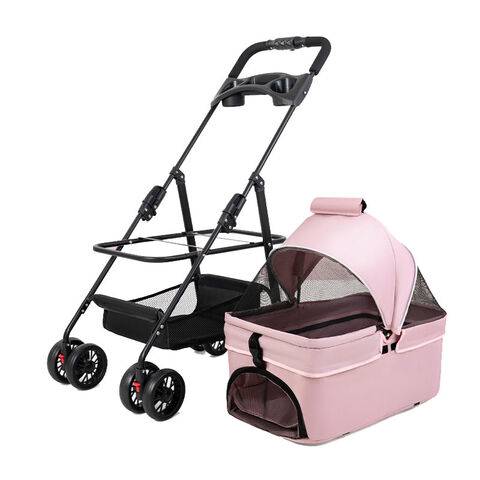
What Counts as a Custom Pet Stroller Feature?
In sourcing terms, a "feature" is any design element that can be varied from a base platform to change how the product looks, feels, or functions. A pet stroller OEM manufacturer typically divides these into three layers, and the layer a feature sits in decides how much it costs and how long it takes to add.
The first layer is the platform: the frame geometry, the fold mechanism, the axle and wheel layout, and the cabin structure. These are the expensive parts, because changing them usually means new tooling, new welding fixtures, and a fresh round of structural testing. Choosing a platform is therefore the single biggest decision you make, and it is the one you should get right before you think about colour.
The second layer is soft goods: the fabric grade, the colourway, the print, the mesh panels, the padding, and the interior liner. These change on an existing platform with no tooling at all, and they are where most new brands get their differentiation for the least money.
The third layer is accessories and branding: parent trays, cup holders, storage baskets, rain covers, cup holders, logo methods, badges, and retail packaging. Individually cheap, and they are the features customers notice first on a listing page because they photograph clearly. The rest of this article walks the eight specific features buyers ask for across those three layers, in the order they tend to come up in a first sample brief.
The 8 Custom Features Buyers Ask For Most
These eight show up again and again in private-label briefs for pet stroller wholesale programs, from Amazon sellers launching a single hero SKU to established brands filling out a range. Each one is listed with why customers want it and what it costs you to add.
1. A detachable or modular carrier cabin
A 2-in-1 design where the cabin lifts off the frame and becomes a standalone carrier, or a pet car seat, is the highest-value feature on this list. It answers a real owner problem: you do not want to lift a sleeping pet out of the stroller at the car door. For the brand, it turns one SKU into a system and justifies a premium price.
- Why customers want it: one product for walk, car, and vet, fewer things to carry
- OEM cost: structural, typically USD 2 to 6 per unit plus tooling for the mounting system
- Watch out for: latch strength and cabin retention are safety-critical, so test them, do not assume them
2. A true one-hand fold
Foldability is a baseline expectation in every major market now, so the feature that differentiates is not "folds" but "folds with one hand, while holding a leash." Reviews punish stiff hinges and latches that pop open. The mechanism, not the fabric, is what fails first.
- Why customers want it: car boots, apartment hallways, buses, and tired owners
- OEM cost: mechanism-dependent; a proven fold platform is cheaper than a new one
- Spec to write down: minimum fold-cycle test count, and whether it stands when folded
3. Swivel-and-lock front wheel with rear suspension
A front wheel that swivels for tight aisles and locks for straight-line pushing is the difference between a stroller that feels premium and one that wanders. Add light rear suspension and the ride stops transmitting every pavement seam to the pet. This is the feature a 4 wheel pet stroller manufacturer is asked about most often.
- Why customers want it: manoeuvrability indoors, stability outdoors, smoother ride
- OEM cost: low to moderate; swivel forks and suspension springs are commodity parts
- Spec to write down: wheel diameter, wheel material, and wheel retention method
4. An extendable canopy with breathable mesh
A canopy that reaches forward past the pet's head gives real sun and light-rain protection, and mesh on three sides keeps air moving. It is one of the cheapest features that reads as premium in a photo, and it matters most in hot markets where overheating is the top complaint.
- Why customers want it: sun, light rain, and ventilation, all visible on the listing
- OEM cost: low; a canopy is soft goods plus a frame wire
- Spec to write down: mesh grade and density, because "mesh" spans a wide quality range
5. Parent tray, cup holders, and a storage basket
Storage is the feature buyers forget to ask for and customers complain about most when it is missing. A parent tray with two cup holders and a large under-basket turns a pet stroller into a day-out product. It adds almost nothing to weight and a lot to perceived value.
- Why customers want it: phone, keys, water, treats, a small shopping bag
- OEM cost: low, about USD 0.50 to 1.50 per unit
- Spec to write down: basket load rating and whether it is removable for washing
6. Custom fabric, colourway, and print
This is where a private-label brand becomes a brand rather than a reseller. Moving from 600D to 900D Oxford changes durability; a custom print, a two-tone colourway, or a seasonal pattern changes shelf appeal. The best part is that none of it requires tooling, only a minimum colour run.
- Why customers want it: shelf differentiation and brand identity
- OEM cost: low; usually free within a minimum colour run, higher for full custom print
- Spec to write down: denier, coating, colour reference, and print method
7. An escape-proof interior safety harness
Every pet stroller should ship with an interior leash or harness clip, and the good ones make it non-negotiable rather than optional. It stops a pet bolting when the canopy is open and it is a genuine safety feature, not a marketing one. Pair it with a reinforced, tightly woven mesh so claws cannot stretch an opening.
- Why customers want it: escape prevention, which drives trust and reviews
- OEM cost: negligible; a clip and a webbing loop
- Spec to write down: harness attachment point and mesh reinforcement
8. Branding: logo, badge, and retail packaging
Logo placement is the feature that makes the product unmistakably yours. Embroidery, heat transfer, a woven label, or a metal badge each give a different feel and a different cost. Retail packaging matters just as much to an Amazon seller, because the unboxing is part of the review.
- Why customers want it: brand recognition and a better unboxing review
- OEM cost: about USD 0.10 to 0.50 per unit depending on method and size
- Spec to write down: logo method, placement, size, and packaging artwork
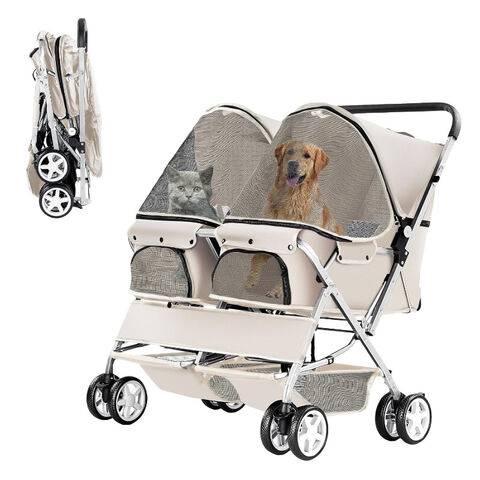
Custom Feature Value Table
When a quotation lands in front of you, this is the table most buyers keep open. It maps each feature to the layer it sits in, roughly what it costs, and whether it needs tooling. Use it to spot the features that are cheap to add and expensive to skip.
| Feature | Layer | New tooling? | Typical cost | Customer impact |
|---|---|---|---|---|
| Detachable cabin | Platform | Yes | USD 2–6 + tooling | Very high |
| One-hand fold | Platform | Often yes | Mechanism-dependent | High |
| Swivel-lock wheel + suspension | Platform | No | Low–moderate | High |
| Extendable canopy + mesh | Soft goods | No | Low | High |
| Parent tray + basket | Accessory | No | USD 0.50–1.50 | Medium–high |
| Fabric, colour, print | Soft goods | No | Low | High |
| Safety harness | Accessory | No | Negligible | High |
| Logo + packaging | Branding | No | USD 0.10–0.50 | High |
Which Features Are Worth the Tooling Cost?
The honest answer is that most custom features do not need tooling at all, and the ones that do only pay off at volume or when they create a genuinely new SKU. A rule that holds up in practice: customise the soft goods and accessories first, and only cut new tooling when a structural feature is the reason a customer would buy your product instead of a competitor's.
Colourways, prints, canopies, trays, baskets, harnesses, and logo methods are all available on an existing platform. They are reversible, cheap, and fast, which makes them the right way to test a market. If a new colourway sells, order more; if it does not, you have lost a dye lot, not a mould. This is also the layer where a lightweight pet stroller supplier can help a new brand look established without a large commitment.
Structural features are different. A detachable cabin, a new fold mechanism, or a new frame geometry each carries one-time tooling plus a fresh structural test, and they only make sense when the expected volume clears the tooling cost with margin to spare, or when the feature is the entire point of the product. If a factory quotes you a new frame at a low unit price and never mentions tooling, ask why, because one of those two numbers is missing.
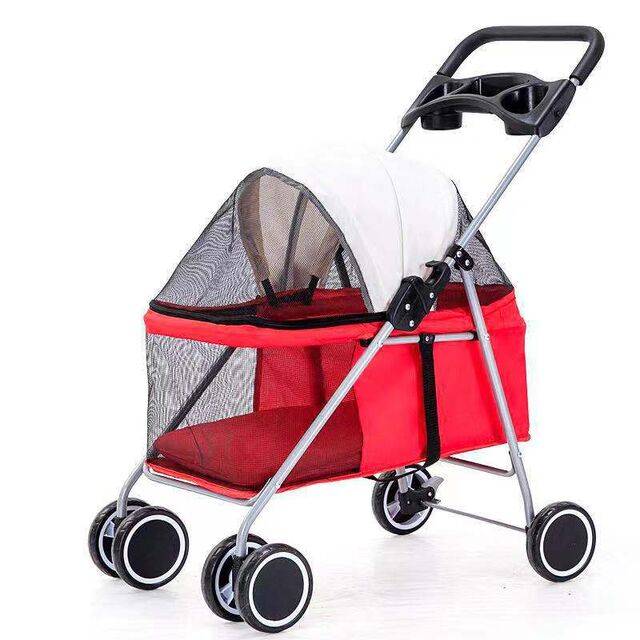
Turning a Feature Wish-List Into a Private-Label Spec Sheet
A feature wish-list becomes a quotable spec sheet when every item is written down in a form the factory can price and the lab can test. Vague briefs produce vague quotes, and vague quotes produce samples that miss. The fix is a short, structured document that separates the three layers and pins each feature to a measurable value.
- Platform: frame material and tube spec, wheel diameter and material, fold type, load rating
- Soft goods: fabric denier and coating, colour reference, mesh grade, padding, liner
- Accessories: tray, cup holders, basket and its load rating, harness, rain cover
- Branding: logo method, placement, size, and packaging artwork
- Compliance: which reference standard applies in the target market, and whether testing is required
When you send that to a pet stroller OEM manufacturer, ask for a line-by-line quotation that prices each feature separately, plus the tooling charge if any. That single request does two things: it tells you whether the factory actually understands your product, and it lets you cut features to hit a price point without guessing which one to drop. A supplier who can only quote a lump sum is a supplier you cannot negotiate with.
A Note on Compliance
Some custom features are cosmetic and some are structural, and the structural ones interact with safety standards. Adding a canopy, a tray, or a basket rarely changes the compliance picture, but changing a frame, a fold joint, a wheel attachment, or the harness can affect stability, locking, and retention, which are precisely what the reference tests examine: EN 1888 for the European market and ASTM F833 for the United States.
We build pet strollers with reference to EN 1888 and ASTM F833 structural requirements, and we can arrange third-party testing through accredited laboratories on request. We do not claim that a model holds a certificate until testing has actually been completed and the report is issued. If a supplier tells you a brand-new custom frame is "EN 1888 certified" before any sample has been tested, treat it as a warning sign rather than an assurance.
Conclusion: Customise What Customers Can See and Touch
The custom features that sell are the ones a customer can see in a photo, feel on the first push, and mention in a review: a cabin that lifts off, a fold that works one-handed, a wheel that locks, a canopy that reaches, a tray that holds the coffee. Start there, because they are cheap, reversible, and fast. Save the structural tooling for the day a feature is the reason your product exists. Then write every feature into a spec sheet, ask for a line-by-line quote, and let the sample prove the platform before you scale.
Get a Free Quote & Custom Feature Spec Sheet
We respond within 24 hours on working days. Sample lead time 7 to 15 days. Bulk MOQ from 300 units per colour.
Frequently Asked Questions
What are the most requested custom pet stroller features?
Across private-label programs the eight most requested features are: a detachable or modular carrier cabin, a one-hand fold, a swivel-and-lock front wheel with rear suspension, an extendable sun canopy with breathable mesh, a parent tray with cup holders and a storage basket, custom fabric and colourways, an escape-proof interior safety harness, and branded packaging with a logo on the frame or canopy. Buyers ask for these because they are visible in product photos and reviews, not because they are technically exotic.
Which custom features are worth paying tooling costs for?
Features that appear in product photos and customer reviews return the tooling cost fastest: colourways, logo placement, canopies, and parent trays need little or no new tooling and lift perceived value immediately. Structural changes such as a new frame geometry, a new fold mechanism, or a detachable cabin carry real tooling and testing cost, so they only pay off at higher volumes (typically 1,000 units and up) or when they create a genuinely differentiated SKU. A good pet stroller OEM manufacturer will show you the tooling line separately so you can decide with numbers.
Can I customise a pet stroller without new tooling?
Yes. Fabric grade, colourway, print, mesh panel, logo method (embroidery, heat transfer, or metal badge), wheel type, canopy, parent tray, storage basket, and packaging can all be changed on an existing platform without cutting new moulds. These are the fastest and cheapest way for a new brand to look different on a shelf. Frame geometry and fold mechanisms are the parts that usually require tooling, so start customising the soft goods and accessories before you commit to a new frame.
Do custom features affect pet stroller safety compliance?
Some do. Adding a canopy, tray, or basket rarely changes the structural picture, but changing a frame, a fold joint, a wheel attachment, or the harness can affect stability, locking, and retention, which are exactly what EN 1888 and ASTM F833 reference tests examine. We build strollers with reference to EN 1888 and ASTM F833 structural requirements and can arrange third-party testing through accredited labs on request. We do not claim to hold certificates for a model until testing is actually completed.
How much do custom pet stroller features add to the unit price?
Soft-goods and accessory changes are usually the cheapest: a colourway change is often free within a minimum colour run, a logo adds roughly USD 0.10 to 0.50 per unit depending on method, and a parent tray or extra basket adds about USD 0.50 to 1.50. Structural features cost more: a detachable cabin or a new fold mechanism typically adds USD 2 to 6 per unit, and a completely new frame geometry carries a one-time tooling charge plus a higher unit cost. Ask for a line-by-line quotation so each feature is priced separately.
Related reads: Pet Stroller Materials 101 · The Complete Guide to Pet Stroller Types · OEM & ODM Services · Get a Quote